
My First Advocacy Day at the Virginia General Assembly
Honoring MLK Day with action, January 19, 2026
I was a senior in high school on April 16, 2007. My sister was a sophomore at Virginia Tech, thankfully living off campus. My now-husband was a freshman, living in the dorms and locked down with the rest of the university. That day is a blur—news updates squeezed in between class periods, frantic texts, and waves of relief as I heard from my sister and friends. Thirty-two students and faculty lost their lives that day at the hands of a gunman.
I enrolled at Virginia Tech the following fall with a quiet certainty that we would be safe—that the adults in charge would ensure something like that could never happen again. But it did. Again and again. In schools, grocery stores, movie theaters, churches. And as the years passed, it became clear that the adults weren’t fixing it. Instead, lawmakers offered “thoughts and prayers” while communities kept grieving.
Nearly twenty years after the mass shooting at Virginia Tech, my perspective has shifted again. I’m now a mom to a three-year-old and an aunt to two nieces and one nephew. I’d be lying if I didn’t say I fear my child going to kindergarten—or dread the day I have to explain why he needs to practice lockdown drills. So in January of last year, when a friend invited me to join a call for what was then Virginia Moms for Change, I accepted. I joined feeling heavy and skeptical, unsure what difference I could possibly make.
Fast forward a year, and I found myself preparing to walk into the halls of the Virginia General Assembly building to speak directly with lawmakers about gun violence prevention as member of the board of Virginians for Change. Until that day, the legislative process felt distant—abstract, procedural, intimidating. But not any more.
Walking in
I arrived around noon and parked at the very top of a garage overlooking the Capitol, genuinely unsure of how the day would unfold. As I walked toward the building, I passed several pro-gun activists wearing bright orange stickers that read “Guns Save Lives” and openly carrying enormous rifles. The scene caught me so off guard that I quite literally walked straight into a small tree branch, knocking my hat right off my head. (Don’t worry — I recovered.)
The air on the Capitol grounds felt charged in another way, too. As it was just 2 days after Abigail Spanberger was inaugurated as Virginia’s first female governor, the shift in energy was palpable — a hopeful sense of change, momentum, and renewed engagement in civic life.
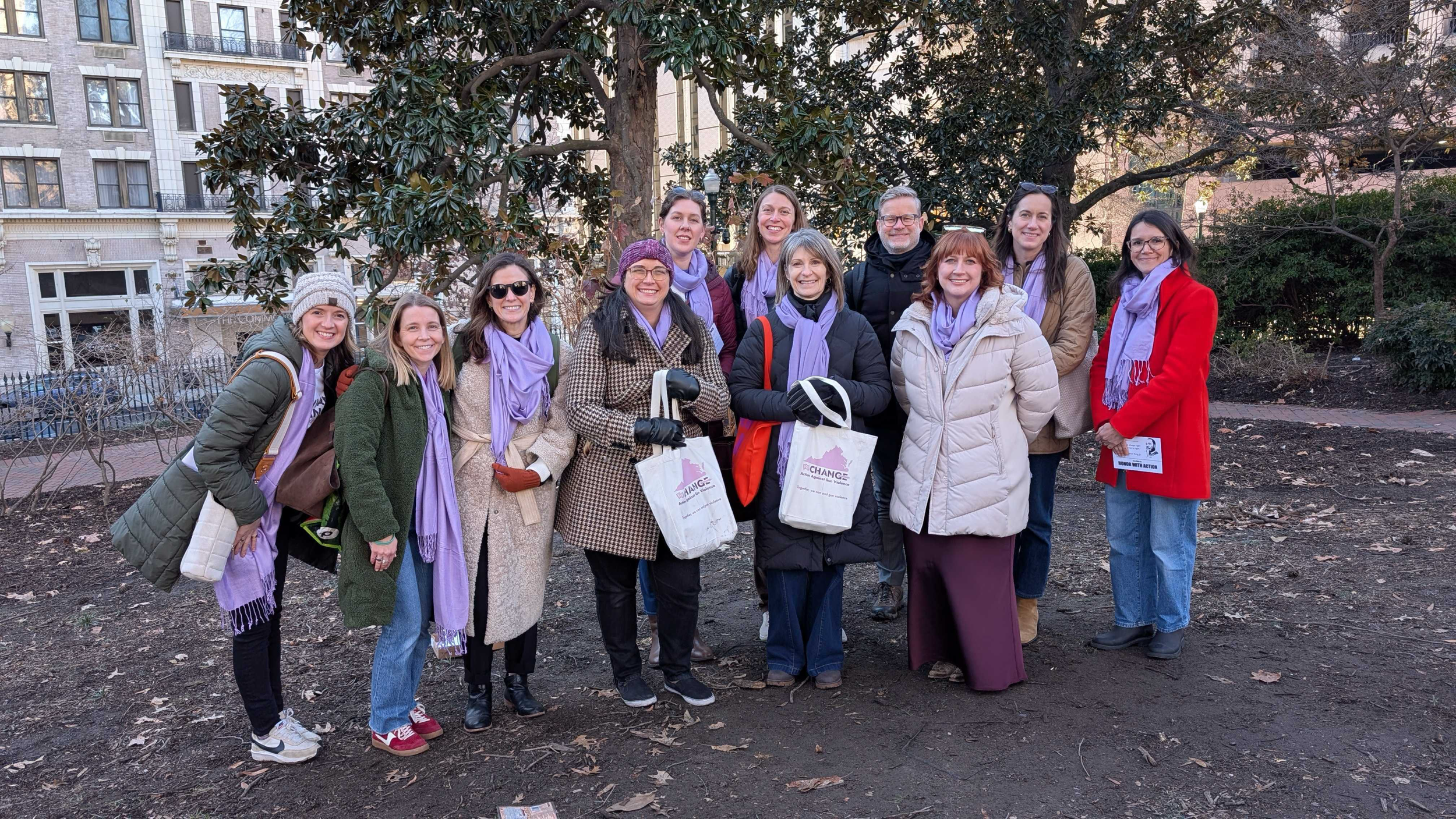
After a bit of confusion outside the General Assembly building, I finally found the public entrance on 9th Street. Once through security, I spotted the Virginians For Change team gathered and doing final prep for the day. Schedules were being distributed, flyers were being sorted on the floor, and VFC volunteers who had only known each other virtually up to this point were excitedly meeting in person.

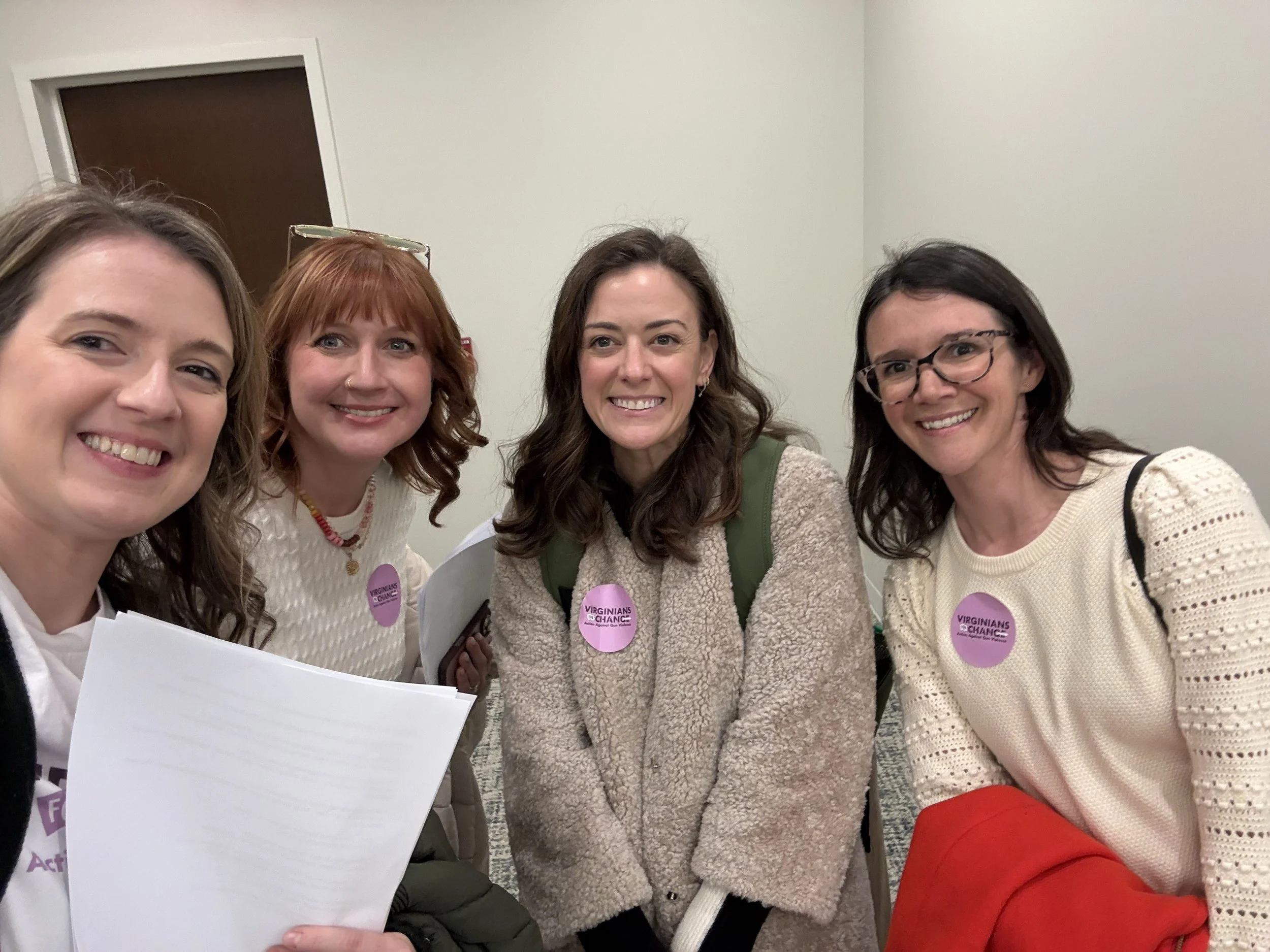
Putting faces to names
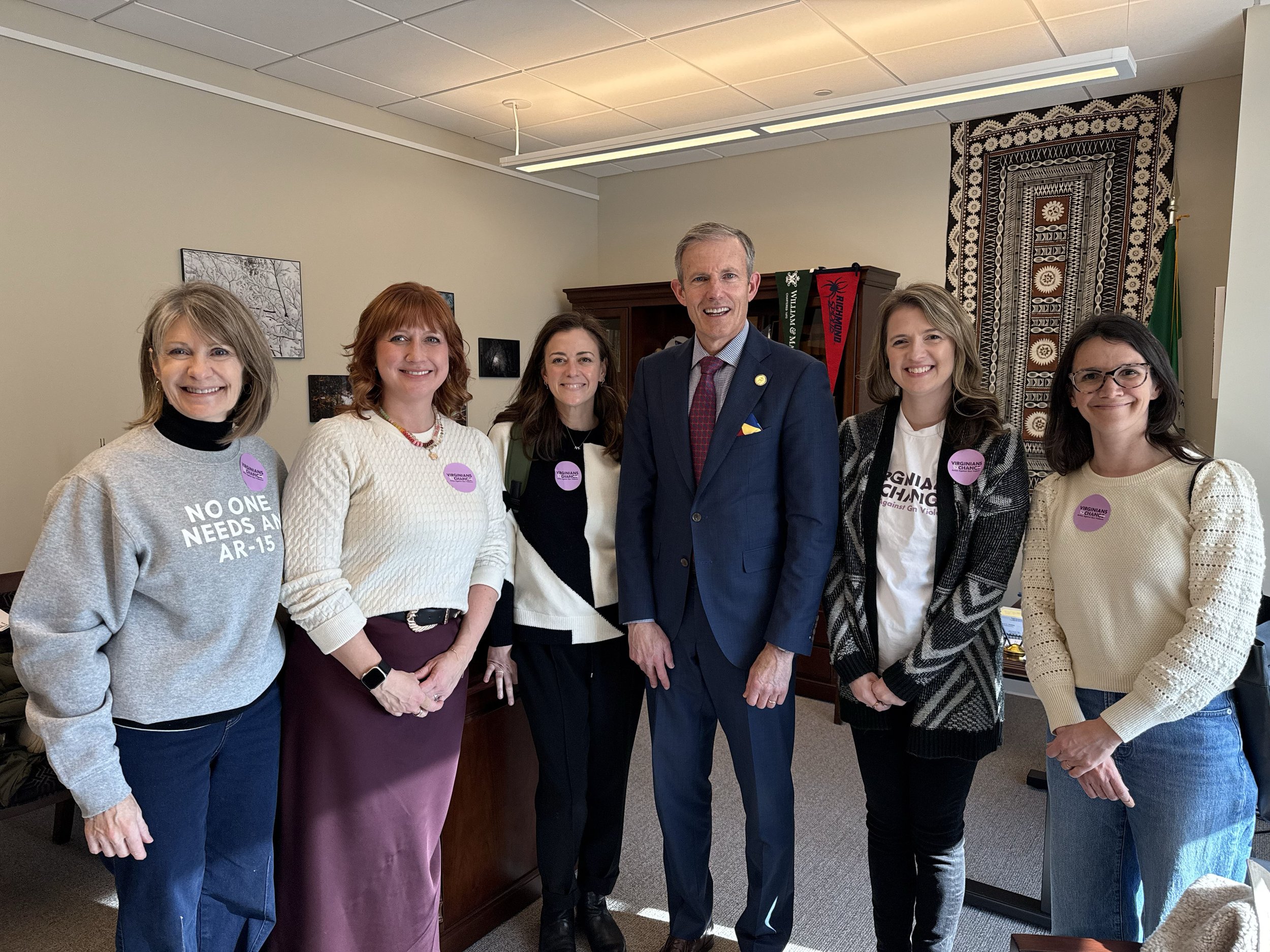
Virginians For Change members with Del. Rodney Willet
We split into small groups with clear to-do lists: scheduled meetings with delegates, senators, and/or their staff, flyer drop-offs to all 140 legislators’ offices with information about our organization and the specific GVP bills and issues we support. In my own meetings, it was powerful to finally put faces to the names I’d seen endlessly during election season and had voted for (or sometimes against). These conversations were encouraging as for the first time in years, all these gun violence prevention bills seemed within reach of passing. As much as I appreciated these meetings with my legislators, a different and unexpected interaction stands out as I consider the impactful moments of Advocacy Day.
While dropping off a flyer at one representative’s office, we were invited in to speak with him. None of us anticipated the conversation—we were simply placing materials with his secretary—so the impromptu offer to step inside his office and chat caught us off guard. As we talked and looked around his office, it became clear that he didn’t support many of the gun violence prevention bills we were advocating for, even citing his own annoyance at having to wait two days to get a gun. While the conversation grew intense at times, we remained respectful and honest, steadfastly sharing both the hard data and common sense behind the bills we support. Walking out, I felt something ignite in me. These opposing viewpoints aren’t theoretical. They exist in real people, in real rooms, shaping real outcomes. And that’s exactly why showing up matters.
Community in a polarizing world
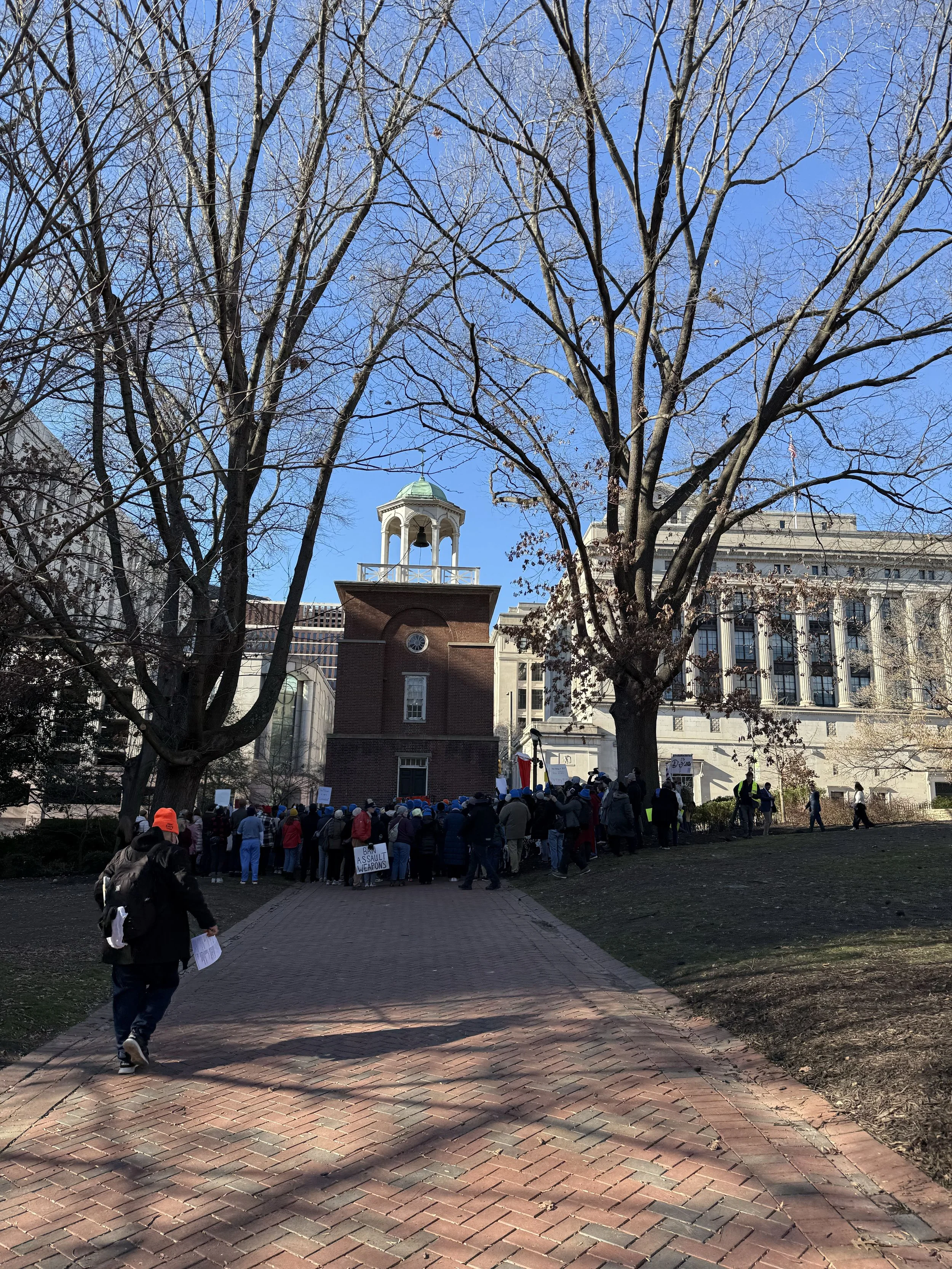
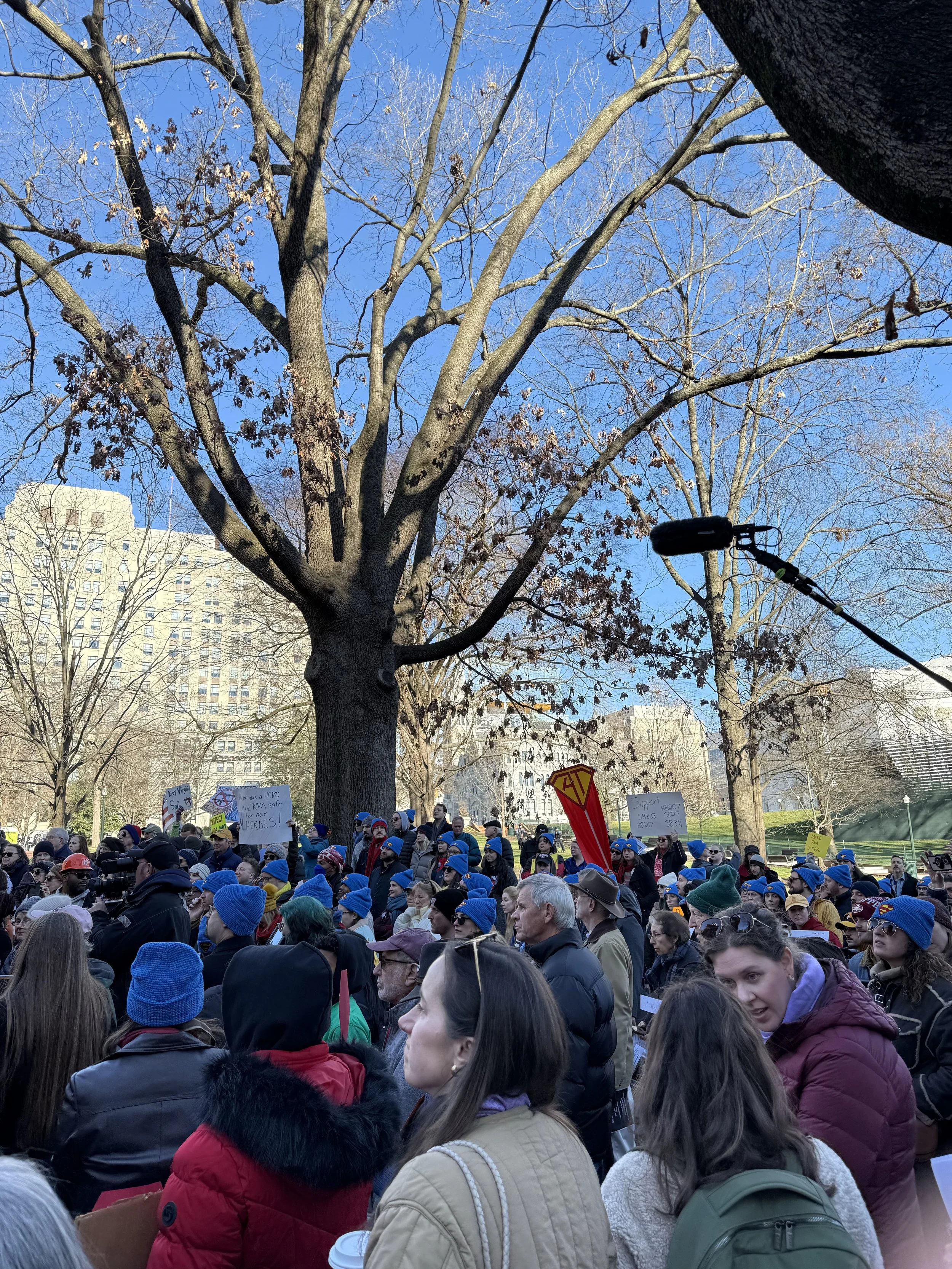
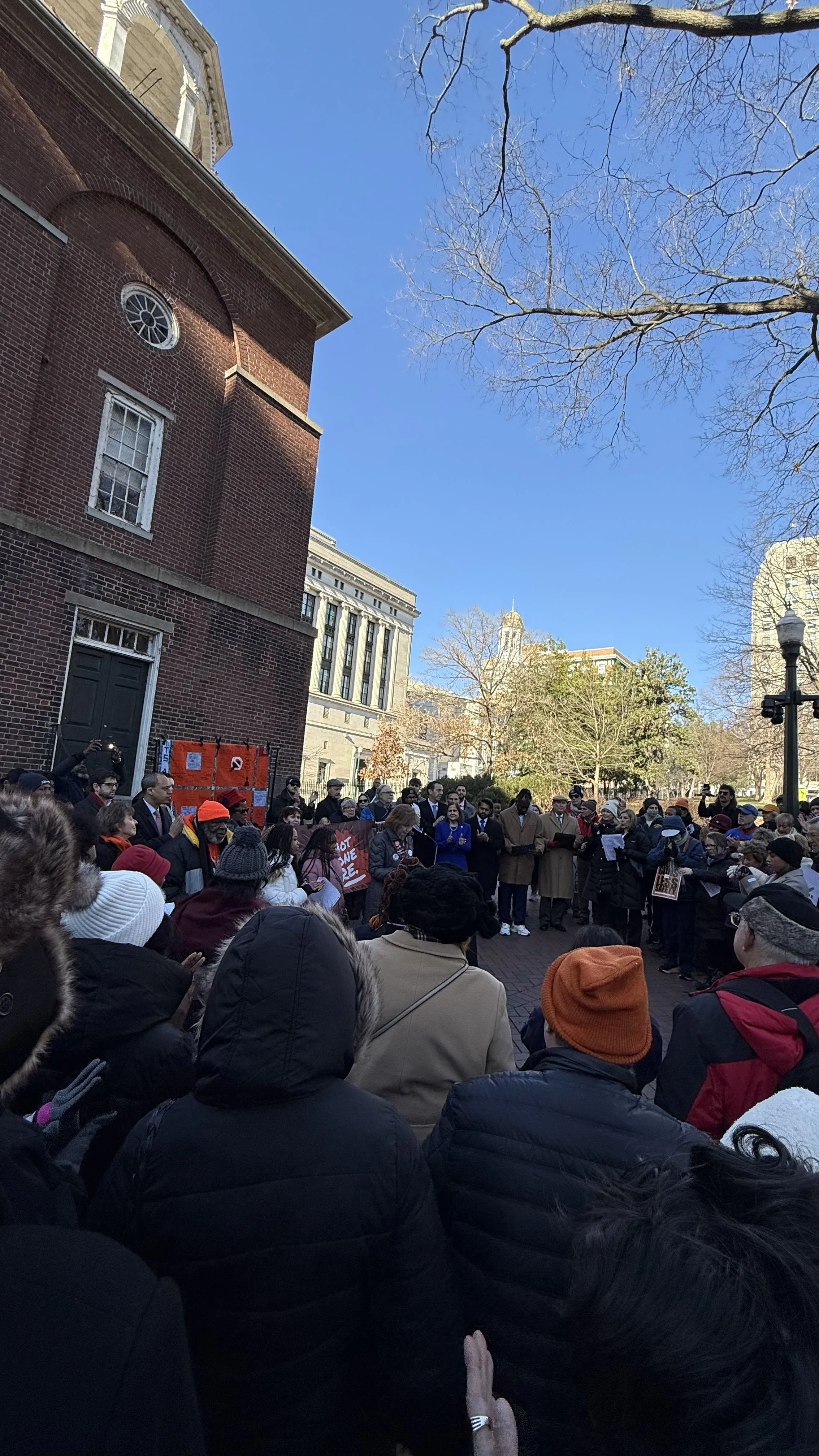
The next portion of Advocacy Day was the outdoor vigil to honor victims and survivors of gun violence. As we approached the Bell Tower in Capitol Square and joined members of the broader GVP coalition, we were met with a sea of blue hats marked with a Superman emblem, worn in memory of Adam Turck. Adam was a Richmond resident who was shot and killed last August after stepping in to help de-escalate a domestic dispute between two people he didn’t know. He was simply trying to help.
Seeing his name, his symbol, and the people who loved him — including his parents — gathered in one place was a sobering reminder of how close and personal gun violence is, and how it can interrupt ordinary moments and take hold of ordinary people who never expected to be part of this story. The hats, the signs, and the shared silence made it impossible to look away from the very real human cost behind the statistics.
The vigil was led by Lori Haas, whose daughter survived being shot at Virginia Tech in April of 2007, and who has been an active leader in the GVP movement in Virginia ever since. Lori introduced speakers representing a wide range of lived experiences with gun violence: children growing up with active shooter drills, adults who have lost loved ones, and community leaders and elected officials including Jay Jones, Virginia’s Attorney General, and Ghazala Hashmi, Virginia’s Lieutenant Governor.
Standing there, surrounded by hundreds of people united by a shared desire to simply make our state safer, felt deeply comforting. In a world that often feels painfully polarized, the sense of collective purpose was grounding, steadying, and motivating.
Finding my voice
After the vigil, something shifted. I felt steadier and more confident walking back into our second round of meetings knowing what they would entail and with a fresh reminder of what is at stake and the many voices being raised in tandem with mine. In one conversation, we each took turns sharing plainly how gun violence had touched our lives and why we were there. It was simple, honest, and incredibly effective.
That moment crystallized another truth for me: you can’t always change minds, but your voice still has value. Legislators are just ordinary people who decided to run for office and won. They should be approachable. You have every right to call them, email them, and meet with them. As a resident of the commonwealth, your experiences and beliefs should fuel their work, and it is their duty to listen
Leaving with a new perspective
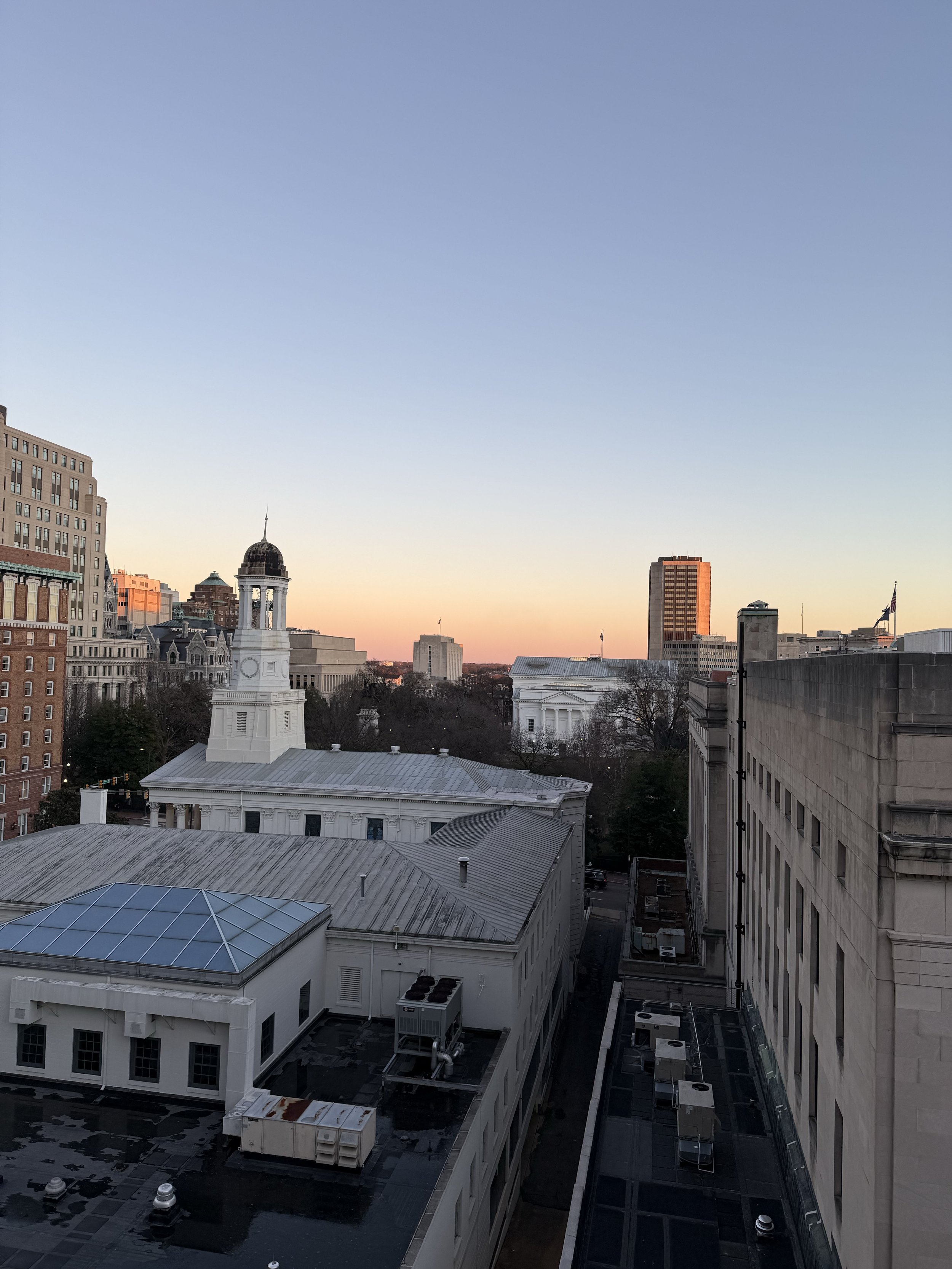
At the end of the day, I found myself back where I started: at the top of the same parking garage, looking out over the Capitol as the light began to shift. The building hadn’t changed. The skyline hadn’t changed. But I definitely had.
That morning, standing there before walking in, the Capitol felt imposing and distant — a symbol of a process I wasn’t sure I belonged in. Leaving, it felt different. More human. More reachable. Less like something happening to us and more like something shaped by us.
Advocacy Day reminded me that participation doesn’t require perfection, expertise, or fearlessness. It just requires showing up. Asking questions. Speaking honestly. Paying attention.
I both started and ended my day as a GVP advocate, but I walked away with a refined perspective and conviction -- one rooted in action, community, and the quiet confidence that my voice, like yours, has a place in the process.
How to Take Action
One of my biggest takeaways is how influenceable the process actually is. Legislators are not untouchable figures behind closed doors. They are representatives, chosen by their constituents, tasked with hearing from us. They want to know what we care about, and it matters that they know we’re paying attention.
If your delegate or senator already aligns with your views, taking the time to show up still counts. A short email, a phone call, a meeting—even a message of support—reinforces that these issues matter and that voters are watching. And, even if your views are opposite of those espoused by your representatives, you still deserve to be heard and they need to be reminded they have constituents who disagree with them as it is their duty to listen to and represent all perspectives. Through dialogue and idea sharing we all hold the power to influence legislation for the better.
Advocacy doesn’t have to look like standing at a podium. It can be contributing to the dialogue by:
Sending an email or leaving a voicemail
Scheduling a meeting
Calling a representative or committee member
Leaving a public comment on a proposed bill
Testifying in person or virtually
If you’re looking for guidance on what actions matter most in real time, following Virginians For Change on Instagram or signing up for the call-to-action newsletter, The Village Square, is a great place to start. They break down what’s happening and how to plug in in ways that feel manageable.
ABOUT THE AUTHOR
Kara McCoy is a Virginia-born graphic designer, art director and small business owner. A Virginia Tech graduate who began college the fall after the 2007 shootings, she grew up believing the adults in charge would fix gun violence. Nearly twenty years later, she is now a mother navigating the fear of sending her child to school and explaining active-shooter drills far too early. Kara led the rebrand and website redesign for Virginians For Change and continues to serve on its board, using her creative work to support safer communities across the Commonwealth.